
Introduction
Most software companies don’t have a hiring problem.
They have a timing problem.
They hire:
- When a developer leaves
- When a project is delayed
- When a client escalates
👉 In short: they hire under pressure
And that’s exactly why:
👉 67% of software companies struggle with inconsistent hiring outcomes
The solution isn’t “hire faster.”
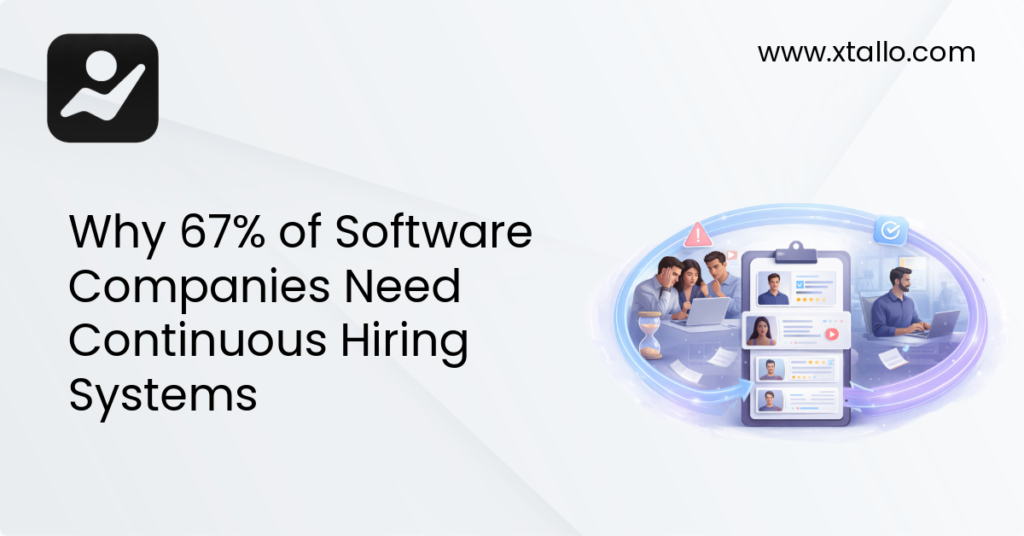
👉 It’s to stop treating hiring as an event
👉 And start treating it as a continuous system
Event-Based Hiring vs Continuous Hiring System
| Factor | Event-Based Hiring | Continuous Hiring System |
|---|---|---|
| Trigger | Urgent need | Always active |
| Talent Availability | Limited | Always available |
| Decision Speed | Slow | Fast |
| Hiring Quality | Inconsistent | Predictable |
| Pressure Level | High | Low |
| Outcome | Risky | Controlled |
What “67% of Companies Need This” Really Means
It means:
👉 Most companies are:
- Hiring reactively
- Evaluating from scratch
- Making rushed decisions
Real Impact of Reactive Hiring
| Problem Area | Impact |
|---|---|
| Hiring Time | Delayed by 2–4 weeks |
| Project Delivery | Slowed down |
| Team Productivity | Drops |
| Client Satisfaction | At risk |
| Rehiring Rate | High |
Why Software Companies Struggle Without Continuous Hiring
1. Demand Is Unpredictable
Projects don’t come with warnings.
👉 You need talent before you need it.
2. Talent Evaluation Takes Time
Traditional process:
- Resume filtering
- Interviews
- Multiple rounds
👉 Too slow for real business needs.
3. High Dependency on the “Right Hire”
One wrong developer can:
- Delay sprints
- Break delivery timelines
- Affect entire teams
Hiring Delay vs Business Impact
| Delay Type | Business Impact |
|---|---|
| 1–2 weeks | Minor delays |
| 3–4 weeks | Missed deadlines |
| 5+ weeks | Client dissatisfaction |
| Wrong hire | Rework + cost increase |
What Is a Continuous Hiring System?
A continuous hiring system means:
👉 You are always:
- Discovering talent
- Evaluating talent
- Keeping a ready pipeline
Even when:
👉 You don’t have an open role
Traditional Pipeline vs Continuous Talent Pipeline
| Factor | Traditional Pipeline | Continuous Pipeline |
|---|---|---|
| Activation | On demand | Always active |
| Candidate Pool | Limited | Pre-built |
| Evaluation | From scratch | Ongoing |
| Hiring Time | Long | Short |
| Decision Confidence | Medium | High |
How Continuous Hiring Changes Everything
1. You Don’t Start From Zero
When a role opens:
👉 You already have candidates
2. You Reduce Hiring Pressure
No more:
👉 “We need someone this week”
Instead:
👉 “We already know who fits”
3. You Improve Hiring Quality
Because:
👉 You’ve seen candidates over time
👉 Not just in one interview
Before vs After Continuous Hiring
| Scenario | Before | After |
|---|---|---|
| Hiring Speed | Slow | Fast |
| Talent Visibility | Low | High |
| Risk of Bad Hire | High | Reduced |
| Team Stability | Low | Strong |
| Delivery Confidence | Uncertain | Predictable |
Where Most Companies Go Wrong
👉 They wait for problems to start hiring
Instead of:
👉 Building a system that prevents problems
Where Xtallo Fits In
Xtallo is designed for this exact shift.
Instead of:
❌ Searching when needed
You get:
✅ Live talent portfolios
✅ Continuous visibility of developers
✅ Video-based proof of skills
👉 You don’t “start hiring”
👉 You’re always ready to hire
The Bigger Shift in Software Hiring
From:
❌ Reactive hiring
❌ Resume filtering
❌ Interview dependency
To:
✅ Continuous evaluation
✅ Proof-based decisions
✅ Real-time talent access
Final Thought
The companies that win won’t be the ones who:
👉 Hire faster under pressure
They’ll be the ones who:
👉 Never stop evaluating talent
Because in modern software companies:
👉 Hiring is not a task
👉 It’s an ongoing system