
Introduction
Traditional resumes are rapidly losing their effectiveness.
Recruiters today review hundreds of applications within minutes, and most resumes look nearly identical – the same bullet points, the same job titles, and the same generic achievements. As a result, it becomes extremely difficult for candidates to stand out.
This is where video resumes are changing the hiring landscape.
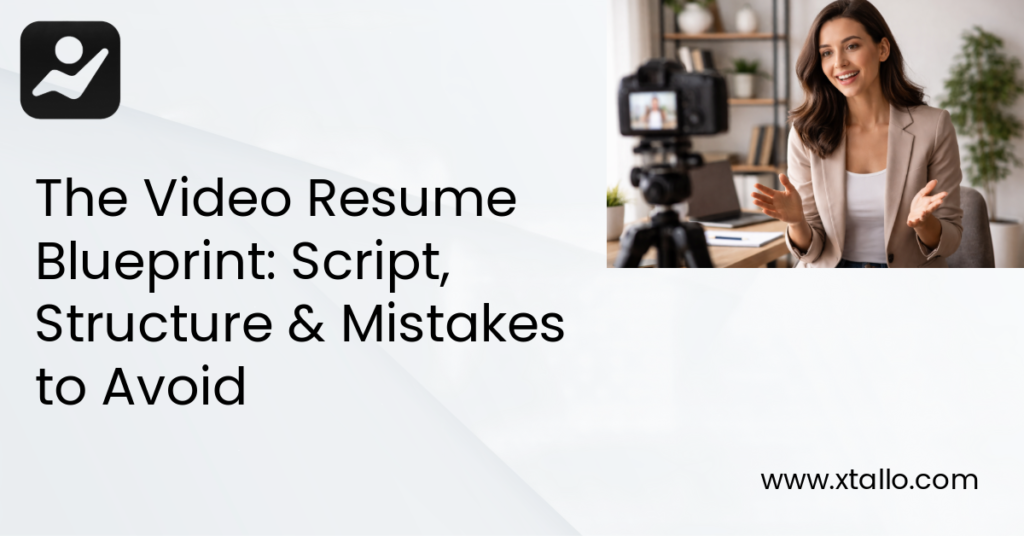
A video resume allows candidates to show personality, communication skills, confidence, and real proof of work in a way that static documents simply cannot. For roles in sales, marketing, product, consulting, customer success, and freelancing, video introductions are quickly becoming a powerful differentiator.
However, many candidates make mistakes when creating video resumes. Some speak too long, others lack structure, and many fail to communicate their value effectively.
This guide explains exactly how to structure a powerful video resume, what to say, and which mistakes to avoid.
Why Video Resumes Are Becoming the Future of Hiring
| Factor | Traditional Resume | Video Resume |
|---|---|---|
| Personality | Not visible | Clearly visible |
| Communication skills | Not measurable | Easy to evaluate |
| Engagement | Low | High |
| Trust factor | Limited | Strong |
| Differentiation | Very difficult | Much easier |
Recruiters increasingly prefer video introductions because they allow them to quickly evaluate candidates beyond written words.
Instead of reading through 200 resumes, a recruiter can watch 20 short video introductions and immediately shortlist the strongest candidates.
The Ideal Length of a Video Resume
| Duration | Effectiveness | Reason |
|---|---|---|
| 15–20 seconds | Too short | Doesn’t communicate enough value |
| 30–60 seconds | Best range | Clear, concise, and engaging |
| 90 seconds | Acceptable | Works for senior professionals |
| 2+ minutes | Not recommended | Recruiters lose attention |
The ideal target is 45–60 seconds.
This allows candidates to clearly communicate who they are, what they do, and why they are valuable.
The Perfect Video Resume Structure
A strong video resume follows a clear structure so recruiters can quickly understand the candidate’s strengths.
| Section | Duration | What to Say |
|---|---|---|
| Introduction | 5–7 seconds | Name, profession, and specialization |
| Expertise | 10–15 seconds | Key skills and industries worked in |
| Achievements | 15–20 seconds | Measurable results and accomplishments |
| Value proposition | 10–15 seconds | What makes you unique |
| Closing | 5–7 seconds | Invitation to connect or explore profile |
This structure ensures that your video stays clear, impactful, and memorable.
Example Script for a Strong Video Resume
| Section | Example Script |
|---|---|
| Introduction | “Hi, I’m Alex, a B2B SaaS sales specialist with 5 years of experience helping tech companies scale revenue.” |
| Expertise | “I specialize in outbound prospecting, enterprise deal closing, and building scalable sales pipelines.” |
| Achievements | “In my last role, I helped grow annual revenue from $1.2M to $3M by building a high-performing outbound strategy.” |
| Value proposition | “My strength lies in turning complex products into clear value propositions that resonate with decision-makers.” |
| Closing | “If you’re looking for someone who can accelerate sales growth, I’d love to connect.” |
This format makes the candidate appear confident, structured, and results-focused.
Essential Elements of a Professional Video Resume
| Element | Best Practice |
|---|---|
| Camera angle | Eye-level camera placement |
| Lighting | Natural light or soft front lighting |
| Background | Clean and minimal |
| Audio quality | Clear voice, minimal noise |
| Body language | Relaxed but confident |
| Eye contact | Look directly at the camera |
These elements significantly improve the professional impression of the video.
Common Video Resume Mistakes
Many candidates fail because they approach video resumes incorrectly.
| Mistake | Why It Hurts Your Chances |
|---|---|
| Reading from a script | Makes you sound robotic |
| Speaking too long | Recruiters lose attention |
| No clear structure | Message becomes confusing |
| No measurable results | Achievements seem weak |
| Poor audio/video quality | Looks unprofessional |
Avoiding these mistakes can dramatically improve how recruiters perceive your profile.
How to Make Your Video Resume Stand Out
| Strategy | Why It Works |
|---|---|
| Focus on results | Companies value outcomes, not tasks |
| Keep it concise | Respect recruiter time |
| Speak naturally | Builds authenticity |
| Highlight specialization | Shows expertise |
| Show confidence | Demonstrates leadership potential |
The most successful candidates focus on clarity and credibility rather than perfection.
Who Should Use Video Resumes
Video resumes are particularly powerful for professionals in the following fields.
| Industry | Why Video Works Well |
|---|---|
| Sales | Demonstrates communication skills |
| Marketing | Shows presentation ability |
| Consulting | Highlights clarity of thinking |
| Customer success | Shows personality and empathy |
| Freelancing | Builds client trust quickly |
For these roles, a video introduction often accelerates hiring decisions.
Conclusion
Hiring is evolving.
Companies are no longer satisfied with static resumes that simply list experiences. They want to understand how candidates communicate, think, and present themselves.
Video resumes allow professionals to demonstrate confidence, expertise, and personality in a format that is far more engaging than traditional resumes.
As the hiring ecosystem continues to evolve, platforms like Xtallo are redefining how companies discover talent by enabling video-first professional profiles that highlight real capability rather than just written credentials.
For candidates who want to stand out in the modern job market, learning how to create a powerful video resume may soon become one of the most valuable career skills.