
Introduction
Layoffs are supposed to fix problems.
- Reduce costs
- Remove underperformance
- Reset teams
But here’s the reality:
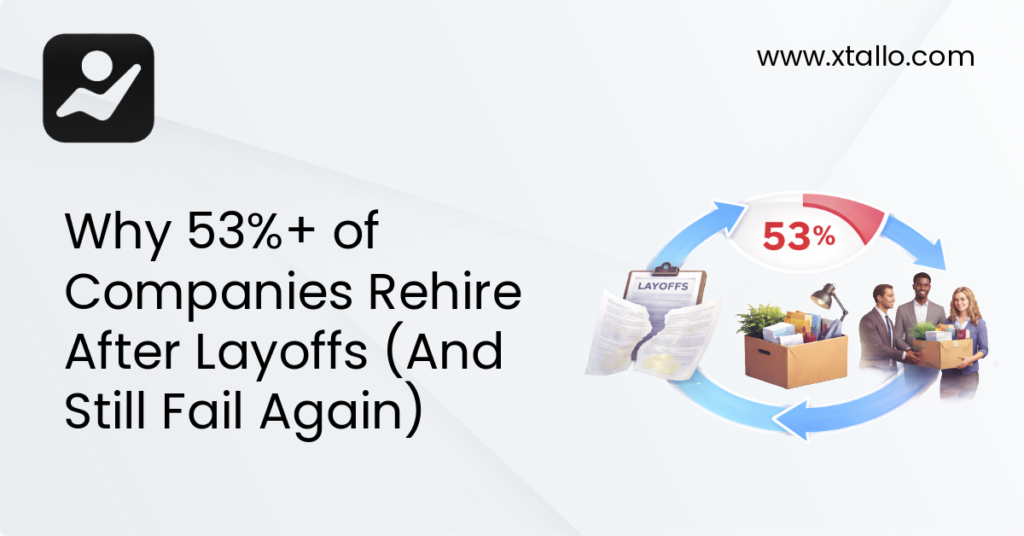
👉 53%+ of companies end up rehiring within months of layoffs.
👉 And many of them fail again.
Why?
Because layoffs fix headcount, not hiring systems.
Layoffs vs Reality (What Actually Happens)
| Expectation After Layoffs | What Actually Happens |
|---|---|
| Costs go down permanently | Costs return within months |
| Teams become efficient | Productivity drops initially |
| Better hiring decisions next time | Same mistakes repeated |
| Lean structure improves growth | Growth slows due to gaps |
👉 The issue is not layoffs.
👉 The issue is what happens after layoffs.
The Core Problem: Rehiring Without System Change
Most companies follow this loop:
- Layoffs
- Pressure builds
- Hiring restarts
- Same hiring methods used
- Same mistakes repeated
👉 Result: Cycle repeats
Traditional Rehiring vs Smart Rehiring
| Factor | Traditional Rehiring | Smart (System-Based) Rehiring |
|---|---|---|
| Trigger | Urgency | Strategy |
| Evaluation | Resume + interview | Proof + performance |
| Speed | Reactive | Controlled fast |
| Talent Quality | Inconsistent | Filtered |
| Outcome | Repeat failure | Sustainable growth |
Why Companies Fail Again After Rehiring
1. They Hire Fast, Not Right
After layoffs:
- Teams are understaffed
- Pressure is high
👉 Hiring becomes rushed.
2. Same Evaluation Methods
Companies still use:
- Resumes
- Interviews
- Gut feeling
👉 Nothing changes.
3. No Visibility Into Real Skills
They don’t see:
- How candidates actually work
- How they think
- How they perform
👉 Hiring is still guesswork.
4. No Continuous Talent Pipeline
Hiring only starts when:
👉 There is a problem
Instead of:
👉 Always being prepared
Cost of Rehiring Mistakes
| Area | Impact |
|---|---|
| Time | 3–6 weeks lost per hire |
| Revenue | Delayed growth |
| Team Morale | Drops after instability |
| Cost | 2x–4x salary loss per bad hire |
👉 Layoffs + bad rehiring = double damage
The Real Fix: Change the Hiring System
Not:
❌ “Hire better people”
But:
✅ “Build a better hiring system”
Old Hiring System vs New Hiring System
| Factor | Old System | New (Live Portfolio-Based) System |
|---|---|---|
| Talent Discovery | Job posts | Continuous visibility |
| Evaluation | Static | Dynamic + proof-based |
| Decision | Delayed | Faster |
| Trust | Assumed | Verified |
| Hiring Risk | High | Reduced |
How Live Portfolios Break the Cycle
1. You See Before You Hire
Instead of:
👉 Reading resumes
You:
👉 Watch real performance
2. You Build Talent Pipeline Early
Before layoffs or hiring:
👉 You already know candidates
3. You Reduce Urgency Hiring
Because:
👉 You’re always ready
4. You Make Data-Based Decisions
Not:
👉 “This candidate sounds good”
But:
👉 “This candidate has proven ability”
Hiring Without vs With Live Portfolio System
| Scenario | Without System | With Live Portfolio System |
|---|---|---|
| Hiring Speed | Slow | Fast |
| Hiring Accuracy | Medium | High |
| Risk of Repeat Failure | High | Low |
| Talent Visibility | Low | High |
| Team Stability | Weak | Strong |
The Bigger Insight
Layoffs don’t fail because of:
- Market conditions
- Business decisions
They fail because:
👉 Hiring systems don’t evolve after them
Where Xtallo Fits In
Xtallo solves this exact problem.
Instead of:
❌ Restarting hiring blindly
You get:
✅ Live, evolving talent portfolios
✅ Video-based proof of skills
✅ Continuous hiring readiness
👉 No more starting from zero
👉 No more guessing
Final Thought
The real question is not:
👉 “Why did we lay off?”
The real question is:
👉 “Why are we rehiring the same way again?”
Because:
👉 If your hiring system doesn’t change,
👉 Your outcomes won’t either.