
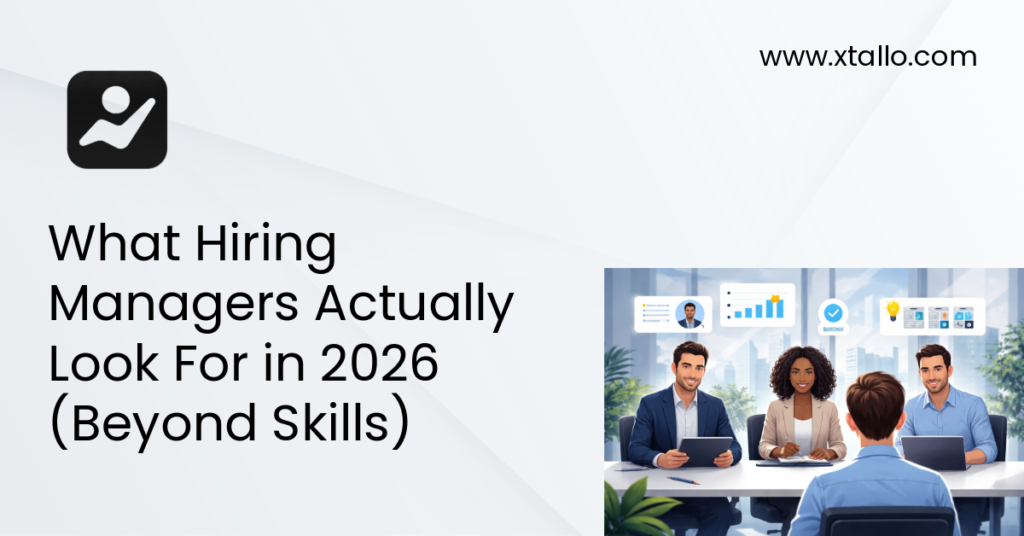
The hiring landscape has changed dramatically over the last few years. Degrees, certifications, and even technical skills are no longer the primary deciding factors for many hiring managers.
In 2026, companies are prioritizing real-world capability, communication, adaptability, and proof of work over traditional credentials.
Organizations are moving away from simply asking “What do you know?” and instead asking a much more important question:
“What can you actually do for our business?”
This shift has reshaped how candidates are evaluated. A strong professional profile today needs to demonstrate impact, clarity of thinking, collaboration ability, and visible proof of execution.
Below is a breakdown of the key attributes hiring managers actively evaluate today – beyond just skills.
Key Factors Hiring Managers Evaluate in 2026
| Hiring Factor | What It Means | Why It Matters Today | Example of How Candidates Show It |
|---|---|---|---|
| Proof of Work | Demonstrating real projects, results, or outcomes instead of only listing skills | Companies want evidence that a candidate can deliver real impact | Case studies, portfolios, GitHub projects, campaign results, or product demos |
| Communication Clarity | Ability to explain ideas clearly and confidently | Teams are increasingly global and remote, making communication critical | Video introductions, recorded presentations, or clear written explanations |
| Problem-Solving Ability | Showing how you approach and solve real business problems | Businesses value people who can think independently and find solutions | Explaining how you solved a previous project challenge |
| Execution Speed | How quickly a candidate can move from idea to result | Startups and tech companies need people who can execute quickly | Showing timelines for projects or campaigns delivered |
| Adaptability | Ability to learn and adapt to new tools, environments, and industries | Technology and business models evolve rapidly | Learning new platforms or transitioning between roles successfully |
| Ownership & Accountability | Taking responsibility for outcomes, not just tasks | Hiring managers want professionals who own results | Describing measurable outcomes of your work |
| Collaboration Ability | Working effectively with cross-functional teams | Modern companies rely heavily on teamwork | Examples of working with designers, developers, marketers, or product teams |
| Professional Presence | How confidently and professionally someone represents themselves | Companies care about how candidates represent the brand | Video profiles, speaking clarity, and personal brand presence |
| Strategic Thinking | Ability to think beyond tasks and understand business goals | Companies want contributors who understand the bigger picture | Explaining how work contributed to company growth |
| Cultural Alignment | Fit with company values, mindset, and mission | Strong culture fit improves long-term retention | Showing interest in company vision or industry |
Why Traditional Hiring Signals Are Losing Importance
For decades, hiring decisions relied heavily on degrees, resumes, and past job titles.
But these indicators often fail to reveal how someone actually works.
Here is how hiring priorities have shifted.
| Old Hiring Signal | Why It’s Becoming Less Reliable | What Replaces It |
|---|---|---|
| Degrees & Certificates | Many professionals learn skills online or through real projects | Demonstrated work and portfolios |
| Long Resumes | Recruiters spend only seconds scanning profiles | One-page profiles and clear highlights |
| Job Titles | Titles vary widely across companies | Documented impact and results |
| Years of Experience | Experience does not always equal capability | Quality of projects delivered |
| Written CVs | Hard to evaluate personality and communication | Video introductions and presentations |
The Rise of Professional Identity
Another major shift in hiring is the focus on professional identity.
Hiring managers increasingly evaluate how clearly candidates present their capabilities rather than just reading bullet points.
A modern professional profile today often includes:
| Modern Profile Element | Purpose |
|---|---|
| Video Introduction | Demonstrates communication skills and confidence |
| Portfolio of Work | Shows real-world execution |
| Case Studies | Explains how problems were solved |
| Skill Demonstrations | Shows practical knowledge |
| Industry Insights | Displays strategic thinking and expertise |
This approach allows employers to understand the person behind the resume, something traditional hiring systems rarely achieve.
Industries Leading This Hiring Shift
Some industries are adopting these modern hiring signals faster than others.
| Industry | Why Modern Hiring Matters Here |
|---|---|
| Technology & Software | Companies value project outcomes and product impact |
| Sales & Marketing | Communication and results matter more than credentials |
| Startups | Teams need adaptable people who can execute quickly |
| Consulting & Strategy | Problem-solving ability is critical |
| Creative & Digital Fields | Portfolios matter more than resumes |
The Future of Hiring
Looking ahead, hiring processes will likely continue evolving toward proof-based talent evaluation.
The most competitive candidates will not simply list skills — they will demonstrate capability through visible work and professional presence.
Future hiring systems are expected to emphasize:
- Video-based introductions
- Real project demonstrations
- Skill-based assessments
- Professional portfolios
- Data-driven performance signals
These elements help employers evaluate candidates more accurately and efficiently.
Final Thoughts
The hiring world in 2026 is no longer about who has the longest resume.
It is about who can clearly show their ability to create results.
Candidates who focus on demonstrating their work, communicating effectively, and presenting a strong professional identity will stand out far more than those relying solely on traditional credentials.
The future of hiring is moving toward transparent, proof-based talent evaluation – where skills are important, but evidence and clarity matter even more.