
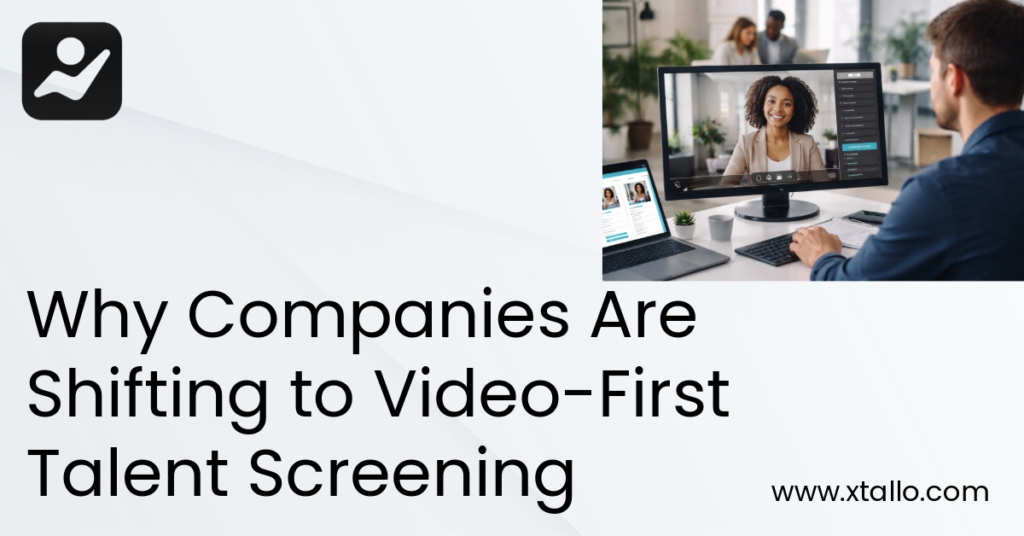
Hiring has quietly entered a new era.
For decades, companies relied on resumes, cover letters, and long interview cycles to decide who gets hired. But the modern workforce has changed dramatically. Teams are distributed, hiring is global, and companies want to assess communication, confidence, personality, and real skills much faster.
Because of this shift, organizations across industries are moving toward video-first talent screening – a method where candidates introduce themselves, showcase their work, and answer structured questions through video before traditional interviews even begin.
This approach is transforming how companies evaluate talent, making hiring faster, more transparent, and significantly more efficient.
In this article, we’ll explore why companies are adopting video-first hiring models, how they work, and why they are quickly replacing traditional screening methods.
The Evolution of Hiring Methods
Before understanding why companies are adopting video screening, it helps to see how hiring has evolved over time.
| Hiring Era | Primary Method | Key Characteristics | Limitations |
|---|---|---|---|
| Traditional Hiring (1990-2010) | Paper resumes and in-person interviews | Manual screening and physical interviews | Slow, location dependent |
| Online Job Portals (2010-2020) | Resume submissions through portals | Digital applications and applicant tracking | Hard to assess personality and communication |
| Remote Hiring Boom (2020-2024) | Video interviews and remote assessments | Global hiring and virtual interviews | Too many interview rounds |
| Modern Talent Screening (2025+) | Video-first candidate introductions | Quick personality and skill evaluation | Requires structured platforms |
This evolution shows a clear trend: companies want faster ways to understand candidates beyond text resumes.
Video screening provides that solution.
Why Traditional Resume Screening Is No Longer Enough
Resumes were originally designed to summarize a candidate’s background. However, they fail to capture several critical aspects employers now value.
| Resume Limitation | Why It’s a Problem | Impact on Hiring |
|---|---|---|
| No personality insight | Companies can’t see communication style | Poor culture fit decisions |
| Hard to verify real skills | Anyone can write impressive achievements | Risk of exaggerated experience |
| Lack of context | Achievements often lack demonstration | Difficult to judge capability |
| Too many applications | Recruiters review hundreds of resumes | Slow hiring cycles |
Because of these limitations, recruiters now prefer to see candidates before scheduling interviews.
Video screening solves this challenge.
What Is Video-First Talent Screening?
Video-first screening allows candidates to present themselves through short recorded videos before the formal interview stage.
This helps employers quickly evaluate:
- Communication skills
- Confidence and clarity
- Professional presence
- Cultural fit
- Real knowledge and expertise
Instead of reading 500 resumes, recruiters can review structured video introductions and responses from candidates.
How Video-First Screening Works
Companies usually follow a structured process when implementing video-based hiring.
| Step | Description | Benefit |
|---|---|---|
| Candidate Profile Creation | Candidate creates profile with experience and portfolio | Quick overview of background |
| Video Introduction | Candidate records a short professional introduction | Shows personality and confidence |
| Skill Demonstration | Candidate answers specific job-related questions | Demonstrates real knowledge |
| Recruiter Screening | Hiring teams review video responses | Faster shortlisting |
| Final Interview | Selected candidates move to live interviews | More efficient hiring process |
This approach reduces unnecessary interview rounds and helps recruiters focus only on qualified candidates.
Key Reasons Companies Are Adopting Video Screening
Several market forces are pushing companies toward this hiring model.
| Reason | Explanation | Business Impact |
|---|---|---|
| Faster hiring cycles | Recruiters screen candidates quickly through videos | Reduces time-to-hire |
| Better candidate evaluation | Communication and personality become visible | Improved hiring decisions |
| Global hiring | Companies hire talent worldwide | Access to a larger talent pool |
| Reduced interview rounds | Only strong candidates reach final interviews | Saves time for hiring managers |
| Authentic candidate representation | Harder to fake expertise in video responses | More reliable screening |
These advantages make video-first screening extremely attractive for companies that hire frequently.
Industries Rapidly Adopting Video-First Hiring
While video screening is spreading across many sectors, some industries are adopting it faster due to their reliance on communication and performance.
| Industry | Why Video Screening Works Well |
|---|---|
| Sales | Communication and persuasion skills are critical |
| Marketing | Creativity and presentation ability matter |
| Customer Success | Personality and problem-solving skills are visible |
| Consulting | Structured thinking and clarity can be evaluated |
| Remote Tech Teams | Helps assess collaboration and communication |
These sectors rely heavily on how professionals communicate and think, making video screening extremely effective.
Benefits for Recruiters and Hiring Teams
Recruiters face increasing pressure to hire faster while maintaining high talent quality.
Video screening provides several operational advantages.
| Hiring Challenge | Traditional Approach | Video-First Approach |
|---|---|---|
| Screening hundreds of applicants | Reading resumes manually | Watching short structured videos |
| Understanding candidate personality | Requires interviews | Visible immediately |
| Comparing candidates | Hard to judge equally | Structured responses enable comparison |
| Scheduling interviews | Time-consuming coordination | Interviews only with shortlisted candidates |
This reduces recruiter workload while improving hiring outcomes.
Benefits for Candidates
Video screening is not only beneficial for companies – it also helps candidates stand out.
| Candidate Advantage | Explanation |
|---|---|
| Better self-presentation | Candidates showcase personality and communication |
| Opportunity to demonstrate expertise | Skills become visible beyond text |
| Reduced bias from resume formatting | Real talent becomes more visible |
| Faster responses from recruiters | Companies shortlist quicker |
Candidates who communicate well often perform significantly better in video-first hiring systems.
The Role of Video Profiles in Modern Hiring
The future of hiring is not just about resumes or job listings.
It is about professional identity.
Video profiles allow professionals to present themselves as complete individuals, not just bullet points.
| Traditional Profile | Modern Professional Profile |
|---|---|
| Resume document | Dynamic professional profile |
| Text-based experience | Video introductions and case studies |
| Static achievements | Demonstrated skills |
| Limited personality insight | Visible communication ability |
This shift is redefining how professionals present themselves online.
The Future of Hiring: Identity Over Resumes
As technology continues to reshape hiring, one trend is becoming clear:
Companies are moving toward evidence-based talent evaluation rather than relying on written claims.
Video-first screening represents a major step in this direction.
Future hiring systems will likely combine:
- video introductions
- portfolio proof
- skill demonstrations
- structured candidate profiles
This will make hiring more transparent, efficient, and fair for both companies and professionals.
Conclusion
The hiring world is evolving rapidly.
Companies no longer want to rely solely on resumes that fail to show real capability. Instead, they are adopting video-first talent screening to evaluate candidates more accurately and efficiently.
By allowing professionals to present their personality, communication skills, and expertise upfront, video-based screening reduces hiring friction and helps organizations make better decisions faster.
As global hiring continues to expand and remote work becomes the norm, video-first hiring systems will likely become a standard part of modern recruitment infrastructure.
Platforms designed around this concept are already shaping the next generation of professional identity – where talent is evaluated not just by what candidates write, but by how they present and demonstrate their abilities.